
James Gandolfini's Cause of Death: Was Sleep Apnea a Factor?
The short answer: James Gandolfini died of a heart attack on June 19, 2013, in Rome. He was 51. The autopsy found natural causes and nothing else in his system. He was never publicly diagnosed with sleep apnea, and no medical record has ever confirmed it. The connection people make between his death and sleep apnea comes from his famously loud snoring, plus a well-documented link between untreated sleep apnea and cardiac risk. That link is real. The diagnosis is not established.
What actually killed James Gandolfini
Gandolfini was in Rome with his 13-year-old son, in town ahead of a film festival in Sicily. He spent the day at the Vatican, had dinner at the hotel, and collapsed in his room that evening. His son called the front desk. Doctors worked on him for close to an hour.
The autopsy came back two days later: myocardial infarction, natural causes, nothing else present. Asked whether the actor had a known heart condition, the family spokesman said he did not.
That is the complete official record. No sleep study. No diagnosis. No treatment history.
So why does sleep apnea come up every time?
Two reasons, and they are worth separating.
The first is legitimate. Gandolfini fit almost every clinical risk factor for obstructive sleep apnea at once: middle-aged, male, carrying significant weight, thick neck, a known snorer, a known napper. Sleep physicians look at that profile and recognize it instantly, because they see it in their offices every week.
The second reason is less flattering. Within 24 hours of his death, a sleep dentist's publicist emailed reporters asking whether the actor's legendary snore had been a warning sign, and used the question to promote his own sleep apnea clinic. That pitch got picked up. A great deal of what you can now find online tying Gandolfini to sleep apnea traces back to it.
We are a company that sells an anti-snoring mouthpiece. We have every commercial reason to tell you Gandolfini died of sleep apnea. We are not going to, because it isn't supported, and because the honest version of this story is more useful anyway.
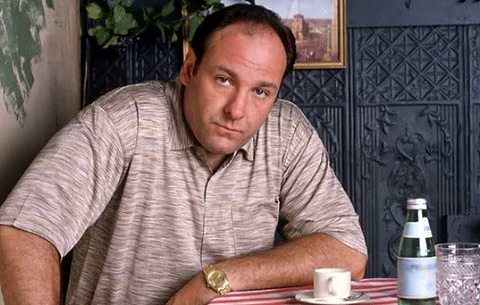
Gandolfini's snoring was well known long before 2013. Whether it signaled anything more was never established.
What was actually known about his snoring
This part is real and reasonably well attested. Gandolfini's snoring had a reputation. The story that circulated among people who worked with him involved a Sopranos production held up while technicians hunted for a mysterious low rumble on the audio, which turned out to be the star asleep nearby.
Loud, habitual snoring is the single most common outward sign of obstructive sleep apnea. It is also extremely common on its own, in people who do not have apnea at all. Snoring happens when soft tissue in a narrowed airway vibrates. Apnea is what happens when that airway closes far enough to interrupt breathing altogether.
Nearly everyone with obstructive sleep apnea snores. Most snorers do not have sleep apnea. Gandolfini was, by every account, firmly in the first half of that sentence. Whether he was in the second half is something no one ever tested.
Why untreated sleep apnea raises cardiac risk
This is the part of the story that holds up regardless of what Gandolfini did or did not have, and it is the reason the question was worth asking at all.
When breathing stops repeatedly through the night, blood oxygen drops and the body responds each time as though it is under threat:
- Blood pressure climbs. Low oxygen constricts blood vessels, and over years that becomes sustained hypertension.
- The heart works harder. Pumping against constricted vessels night after night strains the muscle.
- Rhythms destabilize. Arrhythmias including atrial fibrillation are markedly more common in people with untreated apnea.
- Inflammation rises. Chronic systemic inflammation accelerates atherosclerosis, the arterial hardening behind most heart attacks.
Sleep apnea rarely acts alone. It stacks on top of weight, cholesterol, smoking, and inactivity, which is exactly why the profile is so hard to untangle after the fact. In Gandolfini's case, the risk factors that were documented were enough on their own to explain what happened.
The three types worth knowing
| Type | What happens | How common |
|---|---|---|
| Obstructive (OSA) | Soft tissue at the back of the throat blocks the airway. Snoring is the audible version of the same narrowing | The large majority of cases |
| Central (CSA) | The brain stops signaling the breathing muscles. Often no snoring at all | Uncommon, and easily missed |
| Complex | Both mechanisms together, which makes it harder to treat with one approach | Rare |
The other names that come up, and what the records actually say
Gandolfini gets grouped with several other figures. The evidence behind each is uneven, so it is worth being precise.
Carrie Fisher is the strongest case, because there is an actual coroner's finding. She suffered a medical emergency on a flight from London to Los Angeles in December 2016 and died days later at 60. The Los Angeles County coroner listed sleep apnea alongside a combination of other factors, and also documented atherosclerotic heart disease and drug use. Sleep apnea was named in her file. It was not named alone.
Reggie White is the other documented case. The Hall of Fame defensive end died in 2004 at 43 from a cardiac arrhythmia, with sarcoidosis also present. He had been diagnosed with sleep apnea. His family went on to fund sleep apnea awareness work in his name.
Jerry Garcia died of a heart attack in 1995 at 53, and sleep apnea has been reported among his health problems. We cover what is known in more detail in our piece on Jerry Garcia's health and cause of death.
For the fuller picture, see famous deaths where sleep apnea was a factor and celebrities with sleep apnea and what they used.
The signs worth taking to a doctor
This is the practical takeaway, and the reason the Gandolfini question mattered even though the answer was never found.
- Someone has seen you stop breathing, gasp, or choke in your sleep
- You wake with headaches, a dry mouth, or a sore throat
- You are exhausted no matter how many hours you were in bed
- You fall asleep during the day when you did not intend to
- Blood pressure that will not come down on medication
Any of those, get evaluated. An at-home sleep apnea test has made the first step far easier than it was in 2013. Roughly four in five people with obstructive sleep apnea have never been diagnosed, which is the whole problem in one statistic.
What treatment looks like
CPAP therapy is the standard for moderate to severe obstructive sleep apnea, and it works when it is worn. Adherence is the hard part, and for people who cannot tolerate it there are other options worth raising with a doctor, including oral appliances and surgery in specific cases.
Alongside treatment, weight loss reduces apnea severity by cutting fat deposits around the airway, smoking makes both snoring and apnea worse, and staying off your back helps people whose airway collapses mainly in that position.
If snoring is the only symptom
Most people reading this are not facing what Gandolfini faced. They snore, their partner is not sleeping, and they want it quieter. That is a different problem with a simpler answer.
Snoring has a cause. VitalSleep works on it.
The VitalSleep adjustable anti-snoring mouthpiece gently moves the lower jaw forward to open the airway. FDA-cleared. Made in the USA. Over 600,000 adults since 2011.
Get Quieter Nights60 nights to decide. Free replacements for 1 year. Not a treatment for sleep apnea.
Common questions
Did James Gandolfini die from sleep apnea?
No. His autopsy found that he died of a heart attack from natural causes on June 19, 2013, at age 51. Sleep apnea was never listed as a cause or contributing factor, and he was never publicly diagnosed with it.
Did James Gandolfini have sleep apnea?
There is no confirmed diagnosis. He was a well-known snorer and fit the clinical risk profile, which led doctors and commentators to raise the question after his death, but it remains speculation rather than an established fact.
What was James Gandolfini's cause of death?
A myocardial infarction, or heart attack. He collapsed in his Rome hotel room while traveling with his son. The autopsy confirmed natural causes and found nothing else in his system.
Can sleep apnea cause a heart attack?
Untreated obstructive sleep apnea is an established risk factor for cardiovascular disease. Repeated drops in blood oxygen raise blood pressure, strain the heart, disturb heart rhythm, and accelerate arterial hardening. It rarely acts alone, and usually compounds risks like weight, cholesterol, and smoking.
Does loud snoring mean you have sleep apnea?
Not by itself. Nearly everyone with obstructive sleep apnea snores, but most snorers do not have it. Witnessed pauses in breathing, gasping, morning headaches, and daytime sleepiness are the signals that warrant a sleep evaluation.
- Autopsy findings and family statement reported by Reuters, Variety, ABC News, and CNN, June 21, 2013
- Contemporary commentary from sleep physicians on the speculation surrounding the case, June and July 2013
- Los Angeles County coroner findings in the Carrie Fisher case, June 2017
- Background on myocardial infarction, Medscape
VitalSleep is an FDA-cleared Class II medical device intended to reduce snoring. It is not intended to diagnose or treat obstructive sleep apnea, central sleep apnea, or any other medical condition. Individual results may vary. This article is for general information and is not medical advice. If you suspect sleep apnea, speak with a physician.
Try VitalSleep for yourself and experience restful sleep


