Free Same-Day Shipping on all orders
60-Day Money-Back Guarantee
Over 600,000 customers helped since 2011
Free Same-Day Shipping on all orders
·
60-Day Money-Back Guarantee
·
Over 600,000 customers helped since 2011
·
Your cart is empty
Your Cart (0)
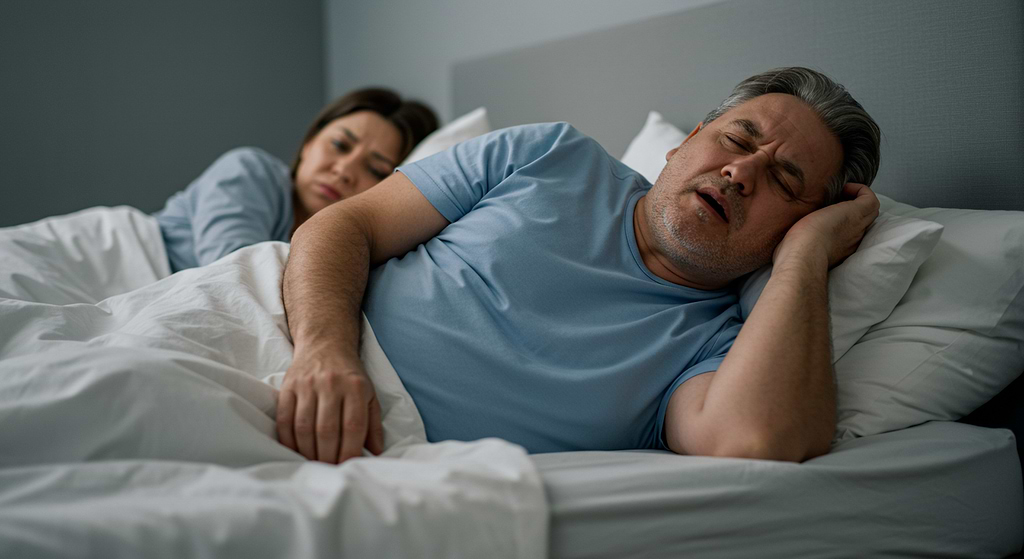
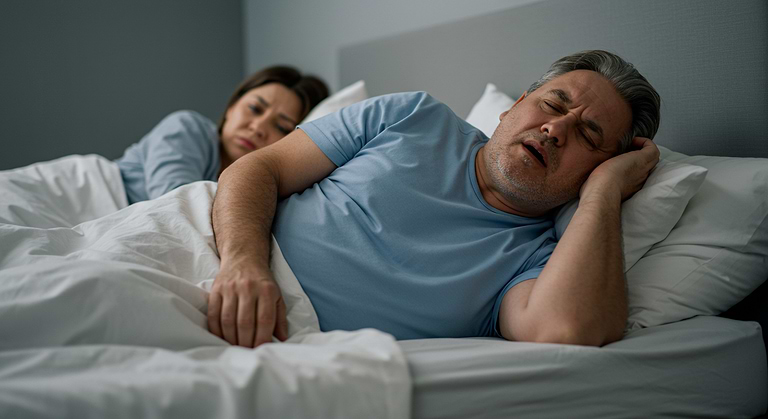
why do people snore - illustration with causes why do people snore - illustration with causes why do people snore - illustration with causes

Why do People Snore? Causes and Health Risks

Snoring is a common issue that, according to Johns Hopkins Medicine, plagues around 45% of all American adults.

If you are reading this, chances are you (or your partner) are among them. This article breaks down the anatomy of snoring and explains: why do people snore?

Reviewed by David Hernandez

Snoring Expert & Founder of VitalSleep

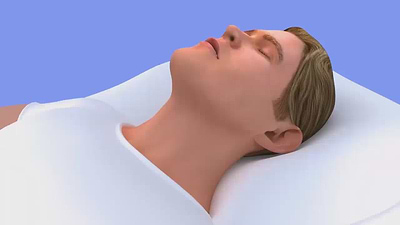
why do people snore - illustration with causes

How to Stop Snoring: Understanding Causes & Effective Solutions

Why You Snore: The Anatomy of Snoring

When you sleep, the muscles in your neck and throat relax. For many adults, this relaxation causes the tongue and soft tissues to fall backward, narrowing your airway. As you breathe in, air is forced through this tight opening, causing the tissues to vibrate violently. This causes the so familiar "snoring" sound. 

Title

The Most Common Reasons for Snoring According to Science

The Most Common Reasons for Snoring According to Science

Snoring can have many reasons: some are related to anatomical factors, whereas others are lifestyle related. This overview provides you with the most common causes. 


Understanding what is causing your snoring or sleep apnea is the key to figuring out how to stop snoring - by selecting the appropriate anti-snoring strategy.

Excess Body Weight (Obesity)

Being overweight, and in particular obesity can be a main factor that causes snowing. A recent study from 2024 found that around "~58% of moderate-to-severe snoring cases are attributed to weight/obesity".  


Excess fat in around the neck can compresses and narrow the throat from the outside and cause or exacerbate snoring. A separate NIH-published review found that obese patients were almost 10 times more likely to report Obstructive Sleep Apnea (OSA) symptoms than non-obese counterparts. More on this topic: Can losing weight cure sleep apnea?

Sleeping Position: Back Sleeping

Sleeping on your back, also referred to as Supine sleeping is another big factor. Scientific studies show that around 56 % of patients with obstructive sleep apnea (OSA) have position-dependent OSA (POSA)


The reason therefore is that sleeping flat on your back allows gravity to pull the tongue backward. This blocks your throat and causes snoring (More on this: How to sleep on back without snoring).

Aging

Your age is another big factor that can contribute to snoring. Research shows that prevalence to snoring increases by ~40–50% in older adults.  This is because our throat muscles tend to lose their natural elasticity as we age. 


These looser tissues are then more prone to collapsing into the airway as we sleep - triggering the so familiar snoring sound.

Other Factors: Alcohol, Genetics & More

While this list focuses on the main causes of snoring there are many other ones, such as:

  • Anatomical Genetics: A recent study with some 400,000 participants that was published in Nature found that around 20% of ones propensity to snoring can be attributed to genetic factors.


  • Nasal Obstruction: While chronic nasal obstruction is rare, when occurring it can cause snoring.

 Who is Most Likely to Snore due to Anatomical Factors?

As we have discussed in the previous section, there are factors that contribute to smoking. But to what extent can they be broken down into predetermined vs habitual factors? Let's break it down. For some people, snoring is hardcoded into their DNA. 

Factors Dominated by Genetics / Anatomy 

(Percent Pre-Determined) 

70%

Low and Thick Palate: People with a lower and thicker than average palate have a narrower airway.

100%

Deviated Septum: If the wall between your nostrils is crooked, your pull air in harder when you inhale, thereby increasing throat turbulences - and snoring.

90%

Enlarged Tonsils: Tonsils act as roadblocks in your airway. Enlarged tonsils thus contribute to snoring.

How Lifestyle Choices and Habits Impact Snoring

Lets look into factors that are totall or mostly under our control: lifestyle and habitual factors that contribute to snoring - and that we can thus, in some cases change. 

Factors Dominated by Habits / Lifestyle 

(Percent Lifestyle Driven) 

80%

Weight Gain: Weight increases have a signfificant impact on snoring as body fat ends up getting stored in our neck, thereby narrowing our airways and causing the so-familiar snoring sound.

100%

Alcohol & Substance Use: Alcohol causes your muscles and tongue to relax. So skipping that nightcap is something within your control that will reduce your snoring!

50%

Sleep Position: Sleeping on you back causes snoring. You can try to change that behavior, but in practice it's hard to succeed. 

Why do Some People Snore Lauder Than Others?

Overview of the Most Influential Clinical Research Related
 to Snoring and Sleep Apnea

Snoring is not binary. Many people, and especially older adults snore, but some also snore louder than others! Noise from snoring can range from a light wheezing (around 40 dB) to noise levels similar to that of a kitchen blender: 90dB. Naturally that can make it very difficult for other to sleep in the same room. The loudness of a snore is determined by three primary variables: Airflow Velocity, Tissue Composition and Mass, and the Pharnynx Size and Shape.

The Bernoulli Effect & Airway Obstruction

The volume of sound is directly correlated to the speed of the air passing through the throat. As the airway narrows (due to anatomical blockage or weight gain), the body must increase the velocity of airflow to maintain oxygen levels. 


This faster-moving air creates a deeper drop in pressure, causing the soft tissues to slap together more violently, resulting in a louder sound.

Throat Tissue Composition and Snoring Sound

The "floppiness" and length of the soft palate and uvula act as the instrument's reed. Longer, thicker, or more relaxed tissues (often due to age or alcohol consumption) have a greater surface area for vibration, producing lower-frequency, higher-amplitude sounds.

Pharynx Size, Shape and Snoring Volume

The size and shape of the pharynx act as an acoustic amplifier. Men, having larger pharyngeal cavities than women, often produce louder, deeper snores due to this "speaker box" effect.

Overview of the Most Influential Clinical Research Related
 to Snoring and Sleep Apnea

Overview of the Most Influential Clinical Research Related
 to Snoring and Sleep Apnea

The science on snoring is constantly evolving and it's important to stay up to date on the latest research. Here is a list of the most influential research papers on why we snore and how to stop snoring.

New England Journal of Medicine (NEJM)

by Young T, et al.

The Wisconsin Sleep Cohort Study

While this study dates back to 1993, it wad published in one of the world’s most prestigious medical journal: The New England Journal of Medicine (NEJM)

The study established the direct linear relationship between Body Mass Index (BMI) and sleep-disordered breathing.

American Journal of Respiratory and Critical Care Medicine

by Schwab RJ, et al.

The Anatomy of Airway Collapse

Published in 2003, this study helped explain why obesity is closely linked to snoring by identifying physical changes in the upper airway. 


Using MRI imaging, Dr. Schwab showed that snorers have significantly larger tongue volume, thicker lateral pharyngeal walls, and deep “fat pads” in the neck that directly compress and narrow the airway in obese individuals.


Nature Communications

Campos, A.I., et al.

The Genetic "Blueprint" of Snoring

In 2020 a study that drew on a dataset of 408,000 participants established the link between genetics and snoring. It helped identify 42 specific genetic loci associated with snoring. 


It also confirmed that while BMI is the biggest driver for snoring, besides genetics other factors such as alcohol consumption and smoking (Does smoking cause snoring?) also contributed. 

How to Overcome Snoring?

Evaluating Common Snoring Remedies: What Actually Works?

Once you understand what causes snoring, finding the most effective solution to address it is key. We have curated an overview of the six most effectives remedies in our article on how to stop snoring

Title

The VitalSleep Mouthpiece: An Immediate & Effective Solution to Snoring

Since the science shows that having the airway open is the solution, the solution in the form of a key is the VitalSleep.


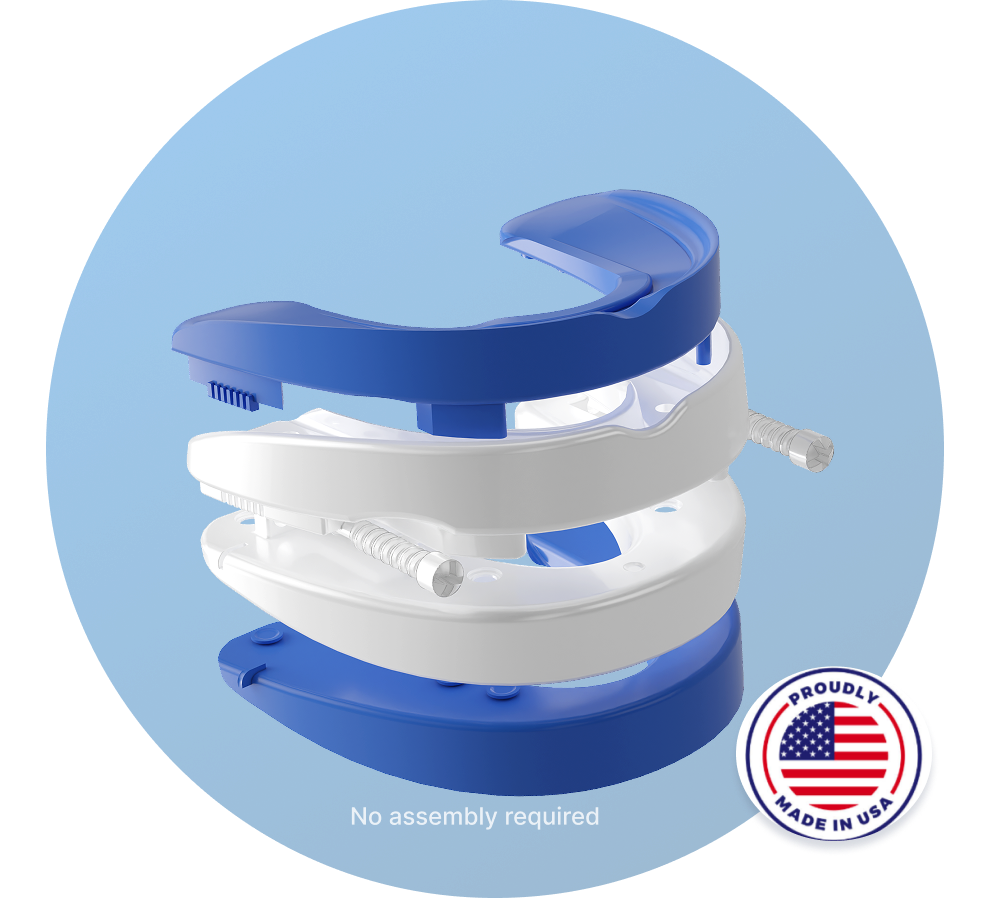
VitalSleep is an FDA-approved device for snoring. It is an oral device designed to keep the jaw forward while a person is sleeping. This process pulls the tongue away from the back of the mouth and prevents airway closure and the snores associated with the procedure.

Shop Now

Why VitalSleep is Superior to Generic Mouthguards

Many over-the-counter mouth guards are quite bulky, "one-size-fits-all" pieces of rubber. But the VitalSleep anti-snoring solution is different:

The Accu-Adjust System: Every jaw is different. VitalSleep is the only oral appliance that lets you make adjustments to the advancement of the jaw in increments of 1mm (up to 8mm), so you can locate the 'sweet spot' where the snoring stops without over-extending your jaw.

Custom Boil-and-Bite Mold: When you first use our anti-snoring mouthpiece you need to follow a simple boil-and-bite process to precisely mold it to the specific contours of your teeth. This ensures a personalized and professional-level fit.

FDA Cleared & USA Made: Why take chances with lower-quality copycats that might harm your health in the long run? VitalSleep is  FDA-cleared ad composed of hypoallergenic materials that are commonly used in medical products.

Shop VitalSleep Now - 60 Night Guarantee

Benefits of the VitalSleep Anti-Snoring Solution

Customizable Fit

It can be molded to fit the user's mouth, ensuring maximum comfort, effectiveness, and a secure fit throughout the night.

Adjustable Jaw Positioning

Allows users to adjust the lower jaw position, enhancing airflow and reducing snoring for better sleep quality for both the user and their partner

FDA-Cleared and Made in USA

Ensuring high safety and quality standards for confidence in its effectiveness and safety for over a decade.

1-3 Year Lifespan

Made from high-quality, BPA-free, and latex-free materials, ensuring durability and reliability for long-term, safe use. Built to last.

FAQ: What Causes Snoring

We’re serious about restoring your silent nights.

Is snoring genetic or just a bad habit? 

For most chronic snorers, it is genetic. While lifestyle factors (like weight and alcohol) trigger it, the underlying cause is usually anatomical—such as a low soft palate, a recessed chin, or a narrow throat. You cannot "learn" to stop snoring if your anatomy is the cause; you must physically open the airway.

Why do I only snore when I sleep on my back? 

Gravity. When you lie in the supine position (on your back), gravity pulls your jaw and tongue backward. This narrows the airway and forces air to squeeze through a tighter space, creating the vibration we hear as snoring. Side sleeping helps, but it doesn't fix the underlying tissue collapse.

Why does alcohol make my snoring worse? 

Alcohol is a potent muscle relaxant. It causes the muscles in your throat and tongue to go limp, effectively turning them into dead weight that collapses into your airway. Even people who never snore often do so after a few drinks.

Is snoring always a sign of Sleep Apnea?

Not always, but they are closely linked. "Simple snoring" is noise without airflow blockage. Obstructive Sleep Apnea (OSA) involves the airway completely collapsing, causing you to stop breathing for 10+ seconds. 


If your snoring is accompanied by gasping, choking, excessive daytime fatigue, or morning headaches, these are red flags for OSA. While VitalSleep is FDA-cleared for snoring, we strongly recommend visiting a sleep specialist if you suspect apnea.

Will losing weight stop my snoring? 

It helps, but it is not a cure-all. Weight loss reduces the fatty tissue squeezing the throat from the outside, but it does not change your bone structure or the length of your soft palate. Many thin people snore loudly due to craniofacial genetics.

Why do men snore more than women? 

Men typically have thicker necks and narrower air passages than women. Men also tend to store fat around the neck (the "apple" body shape), which adds weight to the airway, whereas women tend to store fat in the hips and thighs.

Why is my snoring getting louder as I get older? 

As we age, we lose muscle tone throughout the body, including the throat. The tissues in your airway become floppier and more prone to collapse. This makes the vibration louder and the obstruction more severe.

Is snoring dangerous or just annoying? 

It can be dangerous. While "simple snoring" is just noise, it is often the precursor to Obstructive Sleep Apnea (OSA). If your snoring is interrupted by silence followed by a gasping or choking sound, your airway is completely closing, cutting off oxygen to your brain.

Why do I wake up with a dry mouth and sore throat? 

This is a classic sign of mouth breathing. When your nose is blocked or your jaw falls open, you breathe through your mouth all night. This dries out the mucosal tissue and is a primary driver of loud snoring, as mouth breathing destabilizes the airway.

How do I stop snoring immediately? 

Since snoring is a mechanical problem (a blocked pipe), it requires a mechanical solution. The most effective non-surgical method is a Mandibular Advancement Device (MAD), such as the VitalSleep Anti-Snoring Mouthpiece. It gently advances the lower jaw forward, physically tightening the throat muscles and preventing the tongue from collapsing backward.

This article is for general informational and educational purposes only and is not medical advice. It does not replace guidance from a qualified healthcare professional. If you suspect sleep apnea or experience choking, gasping, loud or persistent snoring, or excessive daytime fatigue, consult a licensed clinician.