

Top 5 Best Pillows for Snoring and Neck Pain (2026 Updated)
|
|
Time to read 11 min
|
|
Time to read 11 min
Snoring all night and waking up with a stiff and achy neck? You are not the only one, and your bed pillow is often part of the problem. In this guide I will walk you through why pillow design matters, the top choices at different price ranges, and the alternatives worth knowing about.
So, what is the best pillow for snoring and neck pain? Let's find out.
The pillows in this guide are third-party products. VitalSleep does not sell, manufacture, distribute, or endorse them. Descriptions are based on publicly available manufacturer and reviewer information and are provided for general educational purposes only. Product names and trademarks belong to their respective owners. Prices move, so check current pricing, specifications, and return policies directly with each seller before buying.
Table of contents
| Image | Product | |||
|---|---|---|---|---|
|
OUR TOP PICK

|
OUR TOP PICK
|
Hero CPAP Pillow
|
|
Check Price |
|
VALUE OPTION
|
VALUE OPTION
|
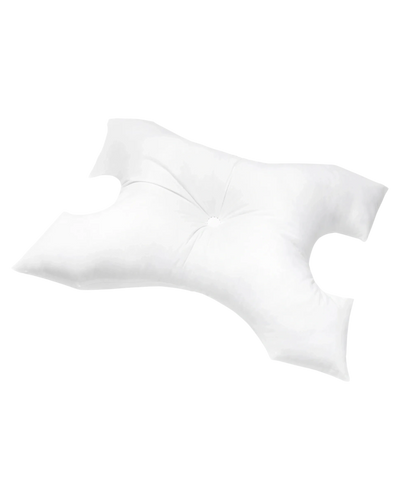
Borden Textile CPAP Pillow
|
|
Check Price |
|
HIGH-END OPTION
|
HIGH-END OPTION
|
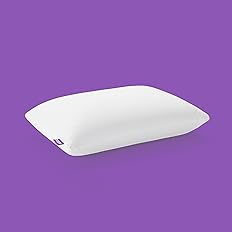
Purple Harmony Pillow
|
|
Check Price |
|
SIDE SLEEPER
|
SIDE SLEEPER
|
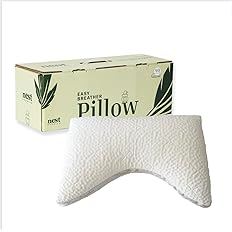
Nest Bedding Side Sleeper Pillow
|
|
Check Price |
|
CPAP ALTERNATIVE

|
CPAP ALTERNATIVE
|
Snoring Mouthpiece
|
|
Check Price |
Key features:
Why it's our top pick:
It ticks most of the relevant boxes for both CPAP users and snorers. It aligns your spine and gives you neck support so that you can sleep more quietly.
Who it's best for:
Sleepers who need serious neck support. Side and back sleepers.
Price: Check the current price at the link above.
Pros:
Cons:
Key features:
Why it's our budget pick:
It does the basics right (alignment and mask clearance) without much cost. Even on a tight budget, it can noticeably reduce snoring.
Who it's best for:
Side sleepers or those on a budget who use CPAP.
Price: Check the current price at the link above.
Pros:
Cons:
Key features:
Why it's worth the premium:
It is comfort oriented. The cooling gel grid and pressure-relieving latex keep your neck supported without pressure points. If budget is no issue, this is the pick.
Who it's best for:
Side and back sleepers who want a luxury pillow.
Price: Check the current price at the link above. Loft option affects cost.
Pros:
Cons:
Key features:
Why it's best for this category:
It fixes the common side-sleeper problem. By filling the shoulder gap, it makes side sleeping much easier to hold all night.
Who it's best for:
True side sleepers of any size, especially those with neck or shoulder pain in that position. Not ideal as a primary pillow for stomach sleepers.
Price: Check the current price at the link above.
Pros:
Cons:
Key features:
Why it's our alternative pick:
A pillow is not always the answer. A pillow changes the angle of your head, while this anti-snoring device works on the airway itself. That is the specific mechanism a mandibular advancement device is designed to address, which is why it often helps in cases where a pillow does not.
Who it's best for: Heavy snorers, and people who snore in every sleeping position rather than only on their back. Also useful for travelers and anyone who cannot tolerate CPAP.
Price: Check the current price at the link above. Backed by a 60-day money-back guarantee.
Pros:
Cons:
A good pillow does more than cushion your head. It helps keep your airway open and your spine aligned. Side sleeping makes it less likely for throat tissue to fall back into the airway, and the right pillow reinforces that effect. By supporting your head and neck at the correct height, a good pillow for snoring helps keep the airway clear. A poorly chosen pillow can tilt your head back or let your chin drop toward your chest, and both narrow the airway. Wedge pillows are often suggested for the same reason, since they elevate the head and upper body.
Proper neck support also prevents morning pain. If your neck is kinked all night, you will wake up sore, and tense muscles can make snoring worse. A contour or memory foam pillow that follows the curve of your head and shoulder relieves that strain. In short, the right pillow keeps your airway clear and your spine neutral, which makes it one of the simplest changes worth trying.
We combined expert advice, clinical research, and real-world testing. Our team includes sleep doctors and veteran testers. We reviewed studies and then tried each pillow ourselves. Our expert testers evaluated comfort, neck support, and even actual snoring volume across different sleep positions and body sizes.
We also consulted authoritative sources and spoke with sleep medicine professionals to make sure our criteria were sound. The result is these five picks, the ones we would trust to quiet snoring and ease neck pain.
Your pillow height needs to keep your neck in line with your spine. Side sleepers usually need more loft to fill the shoulder gap, while back sleepers tend to do better on a medium loft. Pillows with adjustable fill let you add or remove material until the height is right.
A contoured or cervical design holds the neck in a neutral position and takes load off the muscles. Ergonomic shapes lift and support the neck to encourage better posture and quieter breathing.
Foam type matters. Memory foam conforms to your head and takes away pressure points, while latex stays airier. Medium-firm is usually the sweet spot. It is not so soft that your head sinks and not so hard that it pushes your neck out of line.
Sleeping hot makes everything worse. Look for cooling materials such as gel-infused memory foam, aerated latex, or an open grid structure. Bamboo, cotton, and Tencel covers help move moisture and air through the night.
The ideal pillow matches how you sleep. Side-sleeper pillows are taller or have shoulder cutouts. Back sleepers benefit from a center dip that supports the neck. Stomach sleepers need a low profile.
Some pillows are built specifically for snoring. These often have contoured shapes or raised profiles that elevate the head and help keep the airway open. If a pillow is marketed as anti-snoring, it usually has features meant to encourage a better breathing posture. One viral example is the Mellow CloudAlign, the contoured pillow all over TikTok. Before you spend on it, read our honest Mellow pillow review to see how it holds up against real customer feedback.
Anti-snoring pillows can help, especially in mild or positional cases. Small studies of ergonomic and CPAP-friendly pillows have reported fewer snoring events, though the overall evidence base is limited. Many users notice quieter breathing after switching to a supportive pillow and moving onto their side. Aligning the neck and setting the head at the right height keeps the airway more open, which often means fewer snore-triggered awakenings.
That said, a pillow is not a cure. If you snore heavily, or you have moderate to severe obstructive sleep apnea, a pillow may only help a little. Treat it as one easy piece of a larger picture that can also include weight management, CPAP, or a mouthpiece such as VitalSleep. Even so, a supportive pillow tends to improve sleep quality on its own. When your head and neck are supported, you generally sleep deeper and wake with less neck pain.
Anti-snore pillows are the easiest thing to try, since they are non-invasive and simple. Wedge pillows elevate your upper body to open the airway, but they take up a lot of space. Mandibular advancement devices such as VitalSleep move your jaw forward to hold the airway open instead, which tends to work where position alone does not, though they take some getting used to. CPAP remains the standard treatment for sleep apnea. No pillow replaces CPAP in severe cases, but a supportive pillow can make mask therapy more comfortable by reducing leaks and neck strain.
In short, upgrading your pillow is a good first step. It can reduce snoring on its own and it will improve comfort either way. Even if you end up on CPAP or using a mouthpiece, you will wake up in better alignment because of it.
Snoring and neck pain are no laughing matter. The good news is that the right pillow can make a real dent. Whether it is the Hero CPAP Pillow or one of the other picks, finding the best pillow for snoring and neck pain can make each night a little quieter and each morning a little brighter. Remember that pillows alone do not treat serious sleep apnea. Keep healthy habits, sleep on your side, and follow any medical advice you have been given.
Sleep is personal, and so is your path to better rest. Take your time and listen to your body. Simple head and neck support could be the turning point you have been waiting for.
David Hernandez
David is the founder of VitalSleep.com. David has been helping his customers with their snoring issues since 2011.


