

What is the most common CPAP alternative?
Dentist-fitted oral appliances, also called mandibular advancement devices (MADs), for mild to moderate sleep apnea. Your doctor decides if one is right for you.

|
|
Time to read 22 min
Dentist-fitted oral appliances, also called mandibular advancement devices (MADs), for mild to moderate sleep apnea. Your doctor decides if one is right for you.
Sometimes. Doctors may prescribe a dentist-fitted oral appliance for mild to moderate cases. Severe cases may call for weight loss medication or a surgical implant. Do not stop CPAP without talking to your doctor.
It varies by treatment and by patient. In the STAR clinical trial, the Inspire implant reduced apnea events by 68%. Ask your doctor what applies to you.
Only devices cleared for sleep apnea, fitted through a dentist or doctor. Most over-the-counter mouthpieces, including VitalSleep, are cleared to reduce snoring, not to treat sleep apnea.
Getting a good night of sleep can be a challenge, especially if you are suffering from sleep apnea. And while continuous positive airway pressure (CPAP) therapy is an effective solution that helps many and is considered the "gold standard" (Source: Proceedings of the American Thoracic Society), it is not ideal for everyone. If you are struggling with CPAP therapy and or looking for alternatives this article is for you.
Studies consistently show that long-term adherence to CPAP is difficult, with nearly 50% of patients abandoning therapy within the first year due to discomfort, claustrophobia, or noise (Source: Journal of Otolaryngology).
The landscape of sleep medicine has changed in the last few years.
From dentist-fitted oral appliances to daytime therapies and new weight-loss medications, there are now FDA-cleared options your doctor can consider besides CPAP.
This guide covers the main CPAP alternatives available in 2026. It is general information, not medical advice. Do not stop or change CPAP therapy without talking to your doctor.
Before you pick a CPAP alternative, you need to know what you're treating. Snoring and sleep apnea aren't the same thing. Snoring is noise from tissue that vibrates. Sleep apnea means your breathing actually stops or gets shallow, again and again, all night.
A sleep study measures this with your apnea-hypopnea index (AHI). That's how many times per hour your breathing stops or drops. Most CPAP alternatives are made for a specific range:
| AHI (events per hour) | What it means | Options your doctor may discuss |
|---|---|---|
| Under 5 | Normal breathing (you may still snore) | Snoring mouthpiece, lifestyle changes |
| 5 to 14 | Mild sleep apnea | Dentist-fitted oral appliance, positional therapy, eXciteOSA |
| 15 to 29 | Moderate sleep apnea | Dentist-fitted oral appliance, Inspire or Genio, Zepbound (with obesity) |
| 30 or more | Severe sleep apnea | CPAP first; then Inspire, Genio, Zepbound or surgery |
Loud snoring with gasping, choking or long pauses is a warning sign. So is waking up tired after a full night. If that sounds like you, take our Do I Have Sleep Apnea? self-check and talk to a doctor.

If a sleep test ruled out sleep apnea, or your doctor says it is just snoring, VitalSleep is an FDA-cleared mouthpiece that gently moves your jaw forward to help reduce snoring.
One-year limited warranty · Free U.S. shipping
VitalSleep is cleared to reduce snoring. It is not a treatment for sleep apnea and not a replacement for CPAP. If you have sleep apnea, talk to your doctor before changing your therapy. Individual results vary.
For mild to moderate Obstructive Sleep Apnea, dentist-fitted Mandibular Advancement Devices (MADs) are a common alternative to CPAP (Mandibular Advancement Device for Sleep Apnea). This section is about oral appliances prescribed and fitted for sleep apnea. It is not about over-the-counter snoring mouthpieces like VitalSleep, which are cleared for snoring only.
An MAD looks similar to a sports mouthguard or a retainer. It is worn over the teeth while you sleep and works by gently holding your lower jaw (mandible) in a forward position. This forward position helps keep the soft tissues at the back of the throat and the tongue from falling backward and blocking the airway.
A CPAP machine is more effective at holding an airway open with air pressure. Still, a study published in the American Journal of Respiratory and Critical Care Medicine (Source) found that health outcomes between CPAP and clinician-fitted oral appliances were similar in the patients studied.
Why? Compliance. Because oral appliances are quiet and portable, patients in that study wore them more often than CPAP masks.
Even the best treatment does little if it is not used. A treatment you use every night can do more for you than one that sits in your closet. Your doctor can tell you which option fits your level of apnea.
Another aspect is cost: CPAP machine prices typically range from $500 to $2,000 for standard models. Dentist-fitted oral appliances are also a significant cost. Check what your insurance plan covers for each.
For sleep apnea, the choice of device belongs with your doctor. For snoring, many mouthpieces hold the jaw in one fixed position.
The VitalSleep adjustable snoring mouthpiece lets you change the jaw position to a setting that feels right for you. No power, no hose, no distilled water.
See how VitalSleep worksFDA-cleared to reduce snoring. Not a treatment for sleep apnea. Made in the USA. 60 nights to decide. Individual results vary.
If you hate the "forced air" sensation of CPAP but also find mandibular advancement devices uncomfortable on your jaw, Oral Negative Pressure Therapy might be the middle ground you are looking for. The leading device in this category is the iNAP.
Think of CPAP as a leaf blower that pushes your airway open with positive pressure. iNAP is the opposite—it uses a vacuum (negative pressure).
You place a small, soft oral interface in your mouth which connects to a quiet console. The device gently suctions the air out of your oral cavity, creating a vacuum that pulls your tongue and soft palate forward toward your teeth, effectively clearing the airway. Because it doesn't require a mask strapped to your head or forced air blowing up your nose, many users find it significantly less claustrophobic.
While iNAP offers a unique "mask-free" experience, it has distinct limitations that often lead to user frustration.
The most common complaint is saliva management; because the device creates a vacuum in the oral cavity, it can stimulate excess saliva production, which the machine then has to suction away into a collection container. Many users find the sensation of saliva pooling or being suctioned out disruptive to sleep. Additionally, the device requires you to maintain a perfect lip seal all night. If your lips part even slightly during deep sleep, the vacuum seal breaks, the machine may become noisy as it attempts to re-seal, and the therapeutic effect is lost. Consequently, it is generally ineffective for mouth breathers or anyone with chronic nasal congestion, as you must be able to breathe 100% through your nose for the vacuum to work. Some users also report tongue or gum soreness from the constant negative pressure pulling on soft tissues.
For decades, doctors have told sleep apnea patients to "just lose weight," a directive that is often easier said than done (Can losing weight cure sleep apnea?). However, the introduction of GLP-1 receptor agonists has fundamentally shifted how we treat obesity-related sleep apnea.
Medications such as Zepbound (tirzepatide) and Wegovy (semaglutide) have moved beyond simple weight management and are now front-line considerations for treating Obstructive Sleep Apnea.
The landmark SURMOUNT-OSA clinical trial (published in the New England Journal of Medicine) found that tirzepatide significantly reduced the Apnea-Hypopnea Index (AHI) in obese patients. The drug doesn't just reduce neck circumference; it alters metabolic drivers of inflammation that can worsen airway collapse.
A pill or injection isn't a mechanical "stent" for your airway like a CPAP or oral appliance. If your sleep apnea is primarily driven by weight, ask your doctor whether these medications could lower your AHI and what that would mean for your current therapy.
In December 2024, the FDA approved Zepbound as the first prescription medicine for moderate to severe OSA in adults with obesity. Want to know how much weight loss it takes? Read How Much Weight You Need to Lose to Get Off CPAP.
Imagine treating your sleep apnea while you cook dinner or check your emails, leaving you free to sleep with nothing on your face at night. This is the promise of daytime therapy sleep apnea solutions.
Unlike CPAP or mouthguards which act as a crutch to hold the airway open during sleep, these solutions act as a gym workout for your tongue. The theory: You place a device in your mouth for 20 minutes a day for six weeks. This device delivers mild electrical muscle stimulation (EMS) that improves the endurance of the genioglossus muscle (the muscle that keeps your tongue from falling back).
It is important to manage expectations with the daytime treatment approach: this therapy is worth considering for mild obstructive sleep apnea. It is not a quick fix for severe cases. However, for those who simply cannot tolerate the sensation of a mask or mouthpiece while sleeping, committing to a 20-minute daily regimen may be a good start.
The FDA authorized eXciteOSA in 2021 for snoring and mild sleep apnea only (AHI under 15). You use it 20 minutes a day for six weeks, then once a week. Get the full breakdown in our eXciteOSA guide.
For patients with moderate to severe apnea who cannot tolerate CPAP or oral appliances, surgical intervention has become much more sophisticated in recent years.
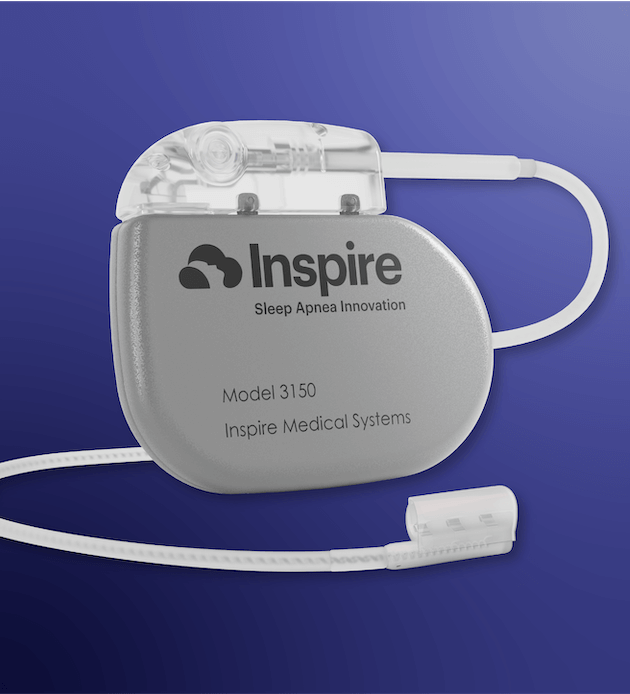
Often referred to as a "pacemaker for the tongue," Inspire is an implantable device placed under the skin of the chest with a lead connecting to the hypoglossal nerve (which controls tongue movement).
You turn the device on with a remote before bed. It monitors your breathing and delivers mild stimulation to the nerve, causing the tongue to move forward out of the airway every time you take a breath. The STAR clinical trial showed a 68% reduction in apnea events, making this an option for those who qualify (typically requires a specific BMI and airway anatomy).
Key Features:
Implantable hypoglossal nerve stimulation device that activates airway muscles
Remote control allows patients to turn therapy on/off
Battery-powered system with 10+ year lifespan
Clinically proven effective for moderate to severe obstructive sleep apnea
No external equipment, CPAP mask, or mouth guard required
Pros:
Highly effective alternative for moderate to severe OSA
No nightly equipment to wear or maintain
Preserves natural sleeping position and movements
Long-term solution with proven durability
Covered by most insurance plans after approval
Significant improvement in quality of life measures
No risk of equipment failure during travel
Addresses upper airway collapse through targeted soft tissue stimulation
Cons:
Requires surgical treatment and implantation procedure
Most expensive option with high upfront costs
Not suitable for all patients (requires specific anatomy)
Potential surgical risks and recovery time
Battery replacement surgery needed after 10+ years
Requires sleep study and extensive evaluation process
Not appropriate for patients with central sleep apnea
Inspire is for adults with moderate to severe OSA (AHI 15 to 100) who have tried CPAP and couldn't use it (Inspire indications). Learn more in What Is Inspire for Sleep Apnea?
Genio also stimulates the nerve that moves your tongue. The difference? Its small implant sits under your chin and has no battery inside. You wear a small patch on your chin at night to power it.
Genio, made by Nyxoah, received FDA approval in August 2025. It's for adults with moderate to severe OSA (AHI 15 to 65), a BMI of 35 or less, and who can't use CPAP. It's still new in the U.S., so ask your doctor how many surgeons near you offer it.
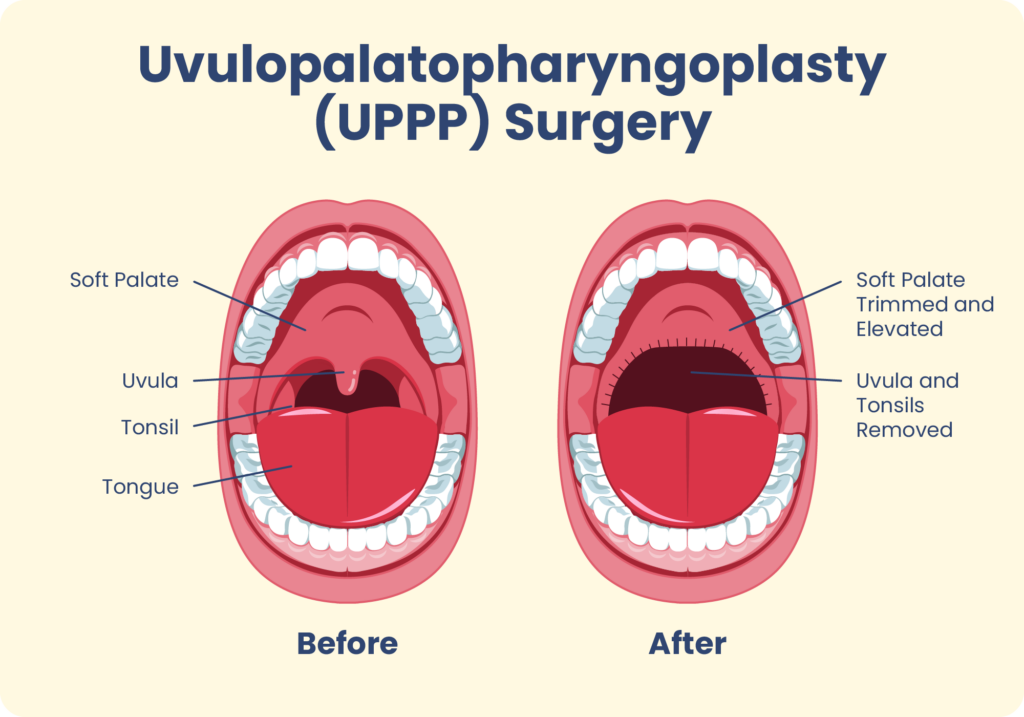
Traditional surgeries like UPPP (removing excess tissue from the throat) and MMA (surgically breaking and moving the jaw forward) are still performed, but they are invasive and have longer recovery times. They are usually reserved for cases where anatomy specifically requires correction.
Surgery can be effective in treating sleep apnea, but it is no guarantee of success. Of all the CPAP alternatives listed in this article, it is the most invasive. It is generally considered where other options have failed. That decision belongs with you and your doctor.
Key Features:
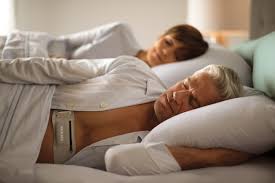
Wearable device that prevents supine (back) sleeping position
Gentle vibration alerts when you roll onto your back during sleep
Smartphone app connectivity for tracking sleep quality
Rechargeable battery with multi-night use
Comfortable chest or back-worn design
Why it's best for this specific case: For the estimated 50-60% of sleep apnea patients whose condition is primarily position-dependent, these devices can be remarkably effective. Research shows that preventing supine sleeping can reduce AHI by 50% or more in appropriate candidates, providing better sleep without the complexity of CPAP machines.
Who it's best for: Patients whose OSA is significantly worse when sleeping on their back, those who want to avoid oral appliances or surgical options, or anyone seeking a simple, non-invasive alternative treatment.
Price range: $200-$500
One of the most common reasons patients give up on their CPAP machines is travel. Dragging a humidifier, hose, mask, and power cord through TSA security is a hassle. If you are a frequent flyer, camper, or road-tripper, here is how the alternatives stack up:
Dentist-Fitted Oral Appliances: The easiest to pack. They fit in a pocket, require no electricity, and need no distilled water.
EPAP Valves (e.g., Bongo Rx): These tiny nasal plugs use your own breath to create pressure. They are the size of a coin and completely disposable or reusable.
Travel CPAP Machines: Smaller than home units but still require power and distilled water (or waterless humidification tablets). They are lighter but still take up luggage space.
Positional Therapy (Belts): Very portable, but often require charging and can be bulky to pack depending on the design.
Flying: U.S. airlines generally treat a CPAP as a medical device, so it usually doesn't count toward your carry-on limit. Check your airline's rules first, especially if you plan to use it on the plane.
Camping: No outlet? Bring a battery pack made for CPAP and turn off the humidifier to make the charge last. A solar charger helps on longer trips.
Another option: Some travelers bring a dentist-fitted oral appliance instead of their CPAP. Ask your doctor first to make sure it works for your level of apnea.
Finding the right CPAP alternative isn't just about comfort - it's about finding a sleep apnea treatment you'll actually use consistently. CPAP therapy compliance rates are low, with studies showing that 25-50% of patients struggle with regular use. This creates a dangerous situation where patients have a diagnosis but no effective treatment for their obstructive sleep apnea.
The mechanism behind CPAP alternatives varies by type of intervention. Dentist-fitted oral appliances work by gently repositioning your lower jaw forward, which pulls the tongue and surrounding soft tissue away from the back of your throat. For some patients with mild to moderate OSA, doctors prescribe this approach instead of CPAP machines.
Here's why choosing the right alternative matters: untreated sleep apnea symptoms significantly increase your risk of cardiovascular disease, high blood pressure, stroke, diabetes, and accidents due to daytime sleepiness. A treatment you actually use is better than one that sits unused in your closet. Do not stop CPAP on your own. Talk to your doctor about what to use instead.
The key is matching the alternative treatment to your specific type and severity of OSA. Position-dependent obstructive sleep apnea responds well to positional therapy, while anatomical obstructions in the upper airway might require surgical treatment. Risk factors like obesity may influence which interventions are most appropriate. Understanding your individual needs through a comprehensive sleep study is crucial for selecting an effective CPAP alternative.
The most important consideration is whether the alternative treatment is appropriate for your level of obstructive sleep apnea. Mild sleep apnea (AHI 5-15) is often managed with dentist-fitted oral appliances and positional therapy, while severe obstructive sleep apnea cases (AHI >30) may require more aggressive interventions like hypoglossal nerve stimulation or surgical treatment.
Look for alternatives that you can realistically use every night. This means considering factors like comfort, ease of use, and how the sleep apnea device fits into your lifestyle. An oral appliance that causes jaw pain or a positional device that constantly disrupts your sleep quality won't be effective long-term for treating sleep apnea symptoms.
Many CPAP alternatives offer some level of personalization to your individual anatomy and needs. Clinician-fitted oral appliances allow lower jaw advancement adjustments, while some positional therapy devices can be calibrated to your specific sleeping position patterns and movement during sleep.
Consider whether the alternative addresses your particular anatomical issues. If your OSA is caused by soft palate collapse, you might need different interventions than someone whose condition is primarily related to tongue position or enlarged tonsils. Some patients benefit from weight loss as an adjunct to other treatments, especially when obesity is a significant risk factor.
Consider the long-term costs and maintenance needs. Oral appliances typically last 12-18 months with proper care, while surgical options like UPPP or maxillomandibular advancement are permanent. Factor in replacement costs, cleaning requirements, and potential repairs when evaluating different treatment options.
Many patients choose CPAP alternatives specifically for travel convenience and to avoid the hassles of CPAP mask fitting and equipment transport. Consider whether the option requires electricity, special storage, or complex setup procedures that might interfere with your lifestyle or preferred sleeping position.
While many alternative treatments aren't covered by insurance like CPAP therapy, some options like Inspire or surgical procedures may be covered. Consider both upfront costs and ongoing expenses when making your decision. The FDA approval status of devices can also affect insurance coverage.
Evaluate the risk profile of each option. Oral appliances can be stopped at any time, while surgical treatments like UPPP are permanent. Oral appliances still have side effects, including tooth movement, bite changes, and jaw soreness. Talk with your clinician about the risks of each option.
Searches like "CPAP alternative Amazon" and "CPAP alternative near me" keep growing. Here's how to shop smart:
Look for FDA clearance. Real devices list it. If you can't find it, be careful.
Check what it's cleared for. Most mouthpieces sold online, including VitalSleep, are cleared for snoring, not sleep apnea.
Read the warranty and return terms. A good company stands behind its product.
In the UK, look for the UKCA or CE mark and ask your GP about NHS sleep services.
Near you, look for a dentist who is a member of the American Academy of Dental Sleep Medicine.
You may have seen social media ads for a "Swedish" no-mask CPAP alternative. We looked into it and couldn't find a Swedish device sold under that name with FDA clearance for sleep apnea.
Before you buy anything for sleep apnea, ask two questions. Is it FDA-cleared or approved? And is it cleared for sleep apnea, or just snoring? You can check any device in the FDA's public database or ask your doctor.
There is no single "best" alternative. The right one depends on your anatomy, your level of apnea and your doctor's advice.
For mild to moderate apnea: Ask your doctor about a dentist-fitted Mandibular Advancement Device (MAD).
For mild apnea and "tongue training": Ask about eXciteOSA.
For claustrophobia sufferers: Ask about iNAP negative pressure therapy.
For severe apnea where CPAP failed: Consult an ENT about Inspire Therapy or GLP-1 medications.
For snoring without sleep apnea: An over-the-counter snoring mouthpiece like VitalSleep is one option. It is not a CPAP alternative.
Below is a summary of the CPAP alternatives covered above. Over-the-counter snoring mouthpieces, including our own VitalSleep, are not in this table because they are cleared for snoring, not sleep apnea. Check each manufacturer's own site for current pricing and availability.
| Image | Product | |||
|---|---|---|---|---|
|
Implant
|
Implant
|
Inspire Upper Airway Stimulation
|
|
Ask an ENT or sleep specialist |
|
|
Positional Sleep Therapy Device
|
|
Sold by several manufacturers |
|
|
Oral Surgery (UPPP/MMA)
|
|
Ask an ENT or sleep specialist |
If a doctor has ruled out sleep apnea and you only snore, an over-the-counter snoring mouthpiece is one option. Here is ours. It is not a CPAP alternative and not a treatment for sleep apnea.
Key Features:
FDA-cleared to reduce snoring in adults
Moldable thermoplastic that forms to your own bite
Adjustable lower jaw advancement
BPA-free, latex-free materials
60-night money-back guarantee and one-year limited warranty
It depends on the alternative treatment and your specific situation. CPAP usually reduces AHI more. For mild to moderate OSA, dentist-fitted oral appliances are a recognised option, and some studies report similar health outcomes because people use them more consistently. Your doctor can tell you which fits your case.
Coverage varies significantly. Most insurance plans don't cover over-the-counter oral appliances like VitalSleep, though some medical plans may cover dentist-made devices with FDA approval. Surgical treatments like UPPP and devices like Inspire are often covered when medically necessary and other interventions have failed. Check with your insurance provider about specific coverage policies for different treatment options.
The best alternative depends on your OSA severity, anatomical factors, lifestyle needs, and personal preferences. Mild sleep apnea is often managed with mandibular advancement devices fitted by a dentist, while position-dependent cases may benefit from positional therapy. Severe obstructive sleep apnea might require surgical options, hypoglossal nerve stimulation, or BiLevel therapy. A comprehensive sleep study and consultation with a sleep specialist can help determine the best approach.
Yes, with your doctor's guidance. It's common to start with less invasive alternative treatments like dentist-fitted oral appliances and progress to other interventions if needed. Some patients combine approaches, for example an oral appliance with positional therapy, or weight loss with other treatments when obesity is a risk factor.
It varies. Dentist-fitted oral appliances often need a few weeks of adjustment. Positional therapy devices work when they keep you off your back. Surgical treatments may take several weeks to months for full healing. Your doctor can confirm results with a follow-up sleep study.
Most non-surgical alternatives can be stopped, so you can try other options. If an oral appliance doesn't provide adequate improvement, talk to your doctor about surgical options, returning to CPAP therapy, or combining approaches.
Yes, but they're generally different from CPAP therapy side effects. Oral appliances may cause jaw discomfort, tooth movement, bite changes, or excessive salivation. Positional devices may disrupt sleep quality as you adjust to new sleeping positions. Surgical treatments carry risks of infection, bleeding, and other complications.
Some can, but treatment options are more limited. Inspire hypoglossal nerve stimulation is specifically approved for moderate to severe OSA, and certain surgical procedures can be effective for severe cases. However, oral appliances and positional therapy are generally not recommended as primary treatments for severe obstructive sleep apnea (AHI >30). BiLevel therapy might be considered before moving to surgical options.
Costs vary widely. CPAP machines carry ongoing costs for masks and supplies. Dentist-fitted oral appliances have a higher upfront cost and need replacing over time. Surgical treatments and implantable devices have high upfront costs. Over-the-counter snoring mouthpieces cost less, but they are cleared for snoring, not sleep apnea. Check current pricing and your insurance coverage before you buy.
This varies by alternative treatment. Over-the-counter snoring mouthpieces like VitalSleep don't require a prescription, but they're cleared for snoring, not sleep apnea. It's wise to consult with a healthcare provider about your sleep apnea treatment plan. Dentist-made dental appliances, surgical procedures, and devices like Inspire all require prescriptions and medical supervision. FDA-approved devices may have different requirements than non-medical alternatives.
Emerging technologies show promise for certain patients with sleep disorders. ExciteOSA provides daytime tongue muscle stimulation, while EPAP devices create expiratory pressure to maintain airflow. Tongue retaining devices offer another option for patients who can't use traditional mandibular advancement devices. However, long-term effectiveness data is still limited compared to established treatments like dentist-fitted oral appliances or surgical options.
Yes. Dentist-fitted oral appliances, Inspire, Genio, positional therapy and Zepbound all skip the mask. If you want to stay on CPAP, nasal pillows are a much lighter mask option.
Not for everyone. CPAP works very well when used every night. Inspire is for adults with moderate to severe OSA who couldn't tolerate CPAP. It requires surgery and specific medical criteria.
It usually refers to social media ads for a no-mask device. We couldn't find a Swedish device sold under that name with FDA clearance for sleep apnea. Check any device's FDA status and ask your doctor before you buy.
VitalSleep Contraindications: Do not use if you have central sleep apnea, severe respiratory disorder, loose teeth or advanced periodontal disease, temporomandibular disorder, have a dental implant less than 1 year old or are under the age of 18.
VitalSleep Warnings: Use of this device may cause tooth movement, bite changes, tooth or gum soreness, pain or soreness to the jaw, obstruction of oral breathing, and excessive salivation.
This information is included with your order.
David Hernandez
David is the founder of VitalSleep.com. David has been helping his customers with their snoring issues since 2009.


