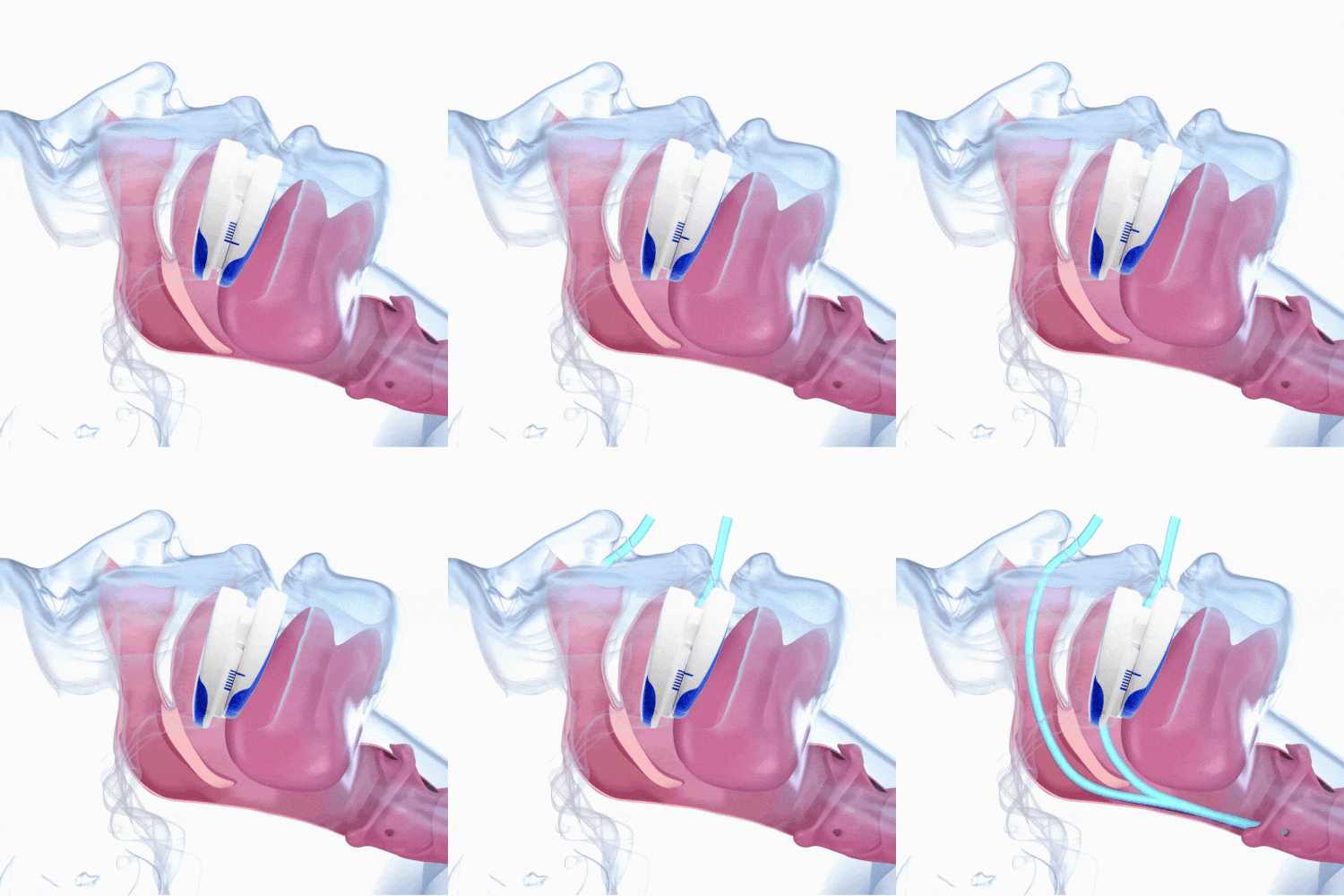
"When you fall asleep, your throat muscles naturally relax, your tongue slips backward, and your throat narrows," Yale Medicine explains Yale Medicine. "That leads to vibrations in the loose throat muscles, causing the snoring sound."
The problem isn't your nose. It's your throat.
We sat down with a sleep specialist to understand this better:
Q: So snoring doesn't actually start in the nose?
A: "The noisy sounds of snoring occur when there is a partial obstruction to the flow of air through the passages at the back of the mouth and nose. This area is the collapsible part of the airway where the tongue and upper throat meet the soft palate." ENT Health
That's why nose strips rarely work. They're treating the wrong part of your anatomy.
Q: Why does this happen when we sleep?
A: "When muscles are too relaxed, the tongue falls backward into the airway, or the throat muscles draw in from the sides into the airway." McGovern Medical School
Sleeping on your back makes it worse because "the tongue collapses to the back of the throat." Yale Medicine
Q: Is this just annoying, or is it actually a problem?
A: It's both. "Snoring can put great strain on relationships. A snoring problem often creates not only tiredness but also frustration and resentment between couples. It can interfere with sexual and emotional intimacy." Psychology Today
And there's real health impact too. Mayo Clinic research found that spouses lose at least one hour of sleep per night due to secondhand snoring. Mute Snoring US Over time, "poor sleep quality results in tiredness, irritability, depression, burnout, and difficulty concentrating during the day."
Q: What actually works to stop it?
A: "There are several studies indicating that advancing the mandible forward can enlarge the airway and reduce pharyngeal collapsibility." PubMed Central
In plain English: gently moving the jaw forward opens the airway. That's what mandibular advancement devices do.
Research published in Sleep Medicine Reviews found these devices "yielded positive post-treatment results" PubMed across multiple studies. One study of 256 patients showed "compliance was about 90%" meaning people actually used them consistently.
Q: But don't those cost thousands of dollars from a dentist?
A: Custom-fitted dental devices can cost $2,500-$3,000 or more. They work - but the technology itself isn't complicated.
That's exactly why VitalSleep exists.
Same jaw-positioning approach. FDA-cleared. Made in the USA. Adjustable with 1mm precision using our Accu-Adjust system.
No dental visits. No impressions. No four-figure bill.
Over 600,000 people have tried it. And we offer a 60-night guarantee - because it either works or it doesn't.